Practical lead generation guide
How to Get New Business Leads
Eight practical ways to build a pipeline, from referrals and search to trigger-based outreach and newly formed business data. Plus a system for deciding which leads deserve attention.

The short answer
Pick one customer, one buying signal, and one repeatable channel
To get new business leads, define the companies you can genuinely help, choose a source that reveals those companies, verify the right contact, and follow up with a message tied to a real need. The strongest systems combine inbound demand with outbound triggered by a timely business event.
The phrase also has two meanings. Some people want new prospects for any business; others want leads for newly formed businesses. This guide covers both and shows where formation data fits.
How DayOneLead helps
We turn fresh business registrations into a campaign you control
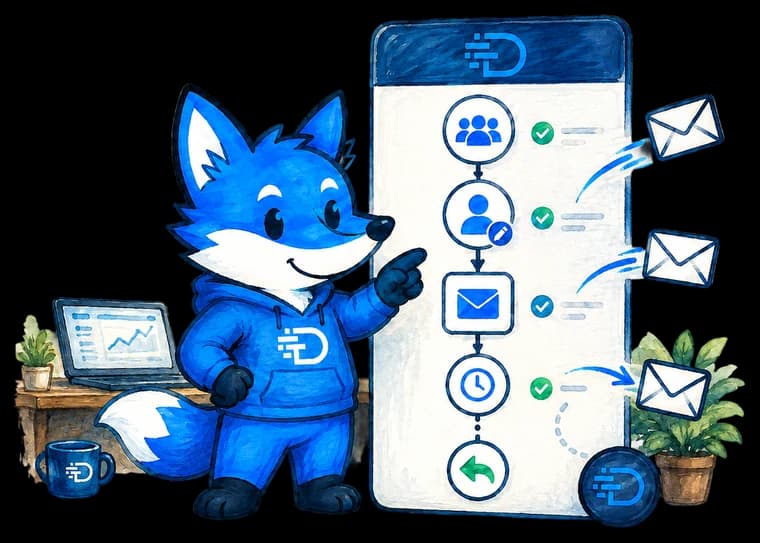
Public filings can tell you that a company exists. They usually do not tell you whether it fits your offer, who to contact, or what to say. DayOneLead handles the work between finding the filing and starting the conversation.
- 1
Tell us what you sell
Define your offer, territory, and ideal new business customer.
- 2
We find and qualify prospects
We monitor new registrations daily, classify the businesses, and match them to your criteria.
- 3
We research the contact
We look for the owner, phone, email, website, and verification signals available for each record.
- 4
You approve the campaign
We organize the leads and draft the sequence. You review everything before launch.
Eight methods
Where new business leads actually come from
No single channel is universally best. Choose according to the trust, speed, scale, and timing signal your sale requires.
Ask customers and partners for specific referrals
Best for: High-trust leads when you already have customers or a professional network
Referrals work best when the request is precise. Instead of asking whether someone knows anybody who needs help, describe the company, role, event, and problem that make a strong introduction.
Build the request into customer milestones: after a successful launch, a strong result, a renewal, or a positive support interaction. Give the customer a short sentence they can forward so making the introduction takes almost no work.
Create a partner channel
Best for: Services purchased near the same event but not competing with each other
Accountants, attorneys, insurance brokers, web agencies, banks, payroll providers, and commercial real-estate professionals often encounter the same companies at different points in the buying process. A useful referral partnership connects complementary services without forcing either side to sell the other product.
Start with five partners serving the same ideal customer. Agree on what counts as a fit, how introductions happen, and how quickly each party follows up. Review lead quality monthly instead of measuring the relationship only by raw introduction count.
Publish pages that answer buying questions
Best for: Compounding inbound demand and buyers researching a problem
Create one page for each real decision a buyer needs to make: the problem, available approaches, cost, tradeoffs, examples, and the next step. Product pages should satisfy commercial intent; guides should answer informational intent without disguising a sales pitch as an article.
Use the language customers use, link related pages together, and add first-hand evidence such as screenshots, methodology, benchmarks, examples, or original data. A smaller collection of complete resources is more useful than dozens of interchangeable posts.
Prospect through focused directories and networks
Best for: Building a first list around a narrow industry, role, or geography
LinkedIn, trade-association directories, local member lists, licensing databases, and industry marketplaces can reveal companies matching a specific profile. Begin with the smallest useful market rather than exporting every business that matches a broad category.
Confirm that each company fits before looking for contact information. A list of 100 accounts with a shared problem is more actionable than 10,000 businesses connected only by a vague industry label.
Use paid search when the buyer is already looking
Best for: Testing offers quickly against high-intent searches
Paid search can put an offer in front of someone already describing the problem. Keep each campaign tied to one intent, send the click to a matching page, and measure qualified conversations or revenue rather than form fills alone.
Start with exact, commercially meaningful searches and a strict budget. Search-term reports reveal how buyers describe the problem and can inform both sales language and future organic pages.
Run trigger-based outbound prospecting
Best for: Teams that can identify a timely reason to contact a defined account
Outbound works better when the account has an observable reason to care now: a formation, expansion, hiring push, funding event, new location, leadership change, technology change, or visible operational gap.
Use the trigger to prioritize, not to manufacture fake familiarity. State the relevant observation, connect it to a problem you solve, and offer a small next step. Keep suppression lists, honor opt-outs, verify contact data, and follow the rules that apply to your channel and market.
Turn new business formations into a daily lead source
Best for: Products and services companies buy while getting established
A recent company formation is a dated sales signal. Banks, insurers, accountants, payroll providers, web agencies, software companies, telecom providers, and local commercial services can use that event to find companies entering an active buying window.
Raw filings still require normalization, classification, contact matching, and qualification. Use formation date, entity type, location, category, website presence, and verification confidence together; do not assume every recent filing represents a brand-new operating company.
DayOneLead currently tracks 1,981,134 newly registered businesses across 7 states, including 94,576 records added in the last 30 days. We clean and classify the filings, research available contact details, match prospects to your criteria, and can build the outreach campaign for your review.
Build a lead loop instead of collecting lists
Best for: Making every channel improve from actual sales outcomes
Record why each lead entered the pipeline, which message it received, whether the contact was valid, and what happened next. Review results by source, segment, trigger, and lead age, not only by campaign total.
Feed what you learn back into targeting. Remove categories that never convert, prioritize signals correlated with replies, improve verification rules, and turn common objections into better pages and offers.
Compare lead-generation methods
These are directional tradeoffs, not performance guarantees. Execution, market, offer, and customer fit change the result.
| Method | Speed | Cash cost | Scale | Primary signal |
|---|---|---|---|---|
| Customer referrals | Medium | Low | Low | High trust |
| Partner channel | Medium | Low to medium | Medium | Shared customer fit |
| Organic search | Slow | Medium | High | Expressed search intent |
| Directories and networks | Fast | Low | Medium | Profile fit |
| Paid search | Fast | High | High | Expressed search intent |
| Trigger-based outbound | Fast | Medium | High | Observable business event |
| Business formations | Fast | Low to medium | High | Recent registration event |
A simple weekly lead-generation system
1. Define the segment
Choose one industry, geography, company stage, and problem. Write down explicit reasons to include or reject an account.
2. Choose the source
Select the channel that exposes both customer fit and a useful signal: intent, trust, timing, or a visible operational need.
3. Verify the contact
Confirm the company, role, email or phone, source date, and any facts you plan to mention before adding the lead to outreach.
4. Run a small batch
Use a message matched to the segment and signal. Keep the batch small enough to review responses and correct mistakes quickly.
5. Measure quality
Track valid contacts, positive replies, qualified conversations, opportunities, and revenue by source, not only messages sent.
6. Tighten the loop
Increase volume only after you know which categories, signals, formation ages, and messages create useful conversations.
Frequently asked questions
How does DayOneLead help me get new business leads?
Tell DayOneLead what you sell, where you sell it, and which businesses are a strong fit. We monitor new business registrations, organize and classify the records, research available owner and contact data, match prospects to your criteria, and draft a cold email campaign. You review the leads and messaging before anything sends.
What is the fastest way to get new business leads?
For most small B2B teams, the fastest combination is a precise referral request plus focused outbound to a narrow customer profile. If your product serves newly established companies, recent business formations can supply a new set of prospects every day.
How can I get business leads for free?
Start with customer referrals, partner introductions, public directories, state filing records, professional networks, and useful content. These sources may not require media spend, but they still require time for research, qualification, contact verification, and follow-up.
Where can I find newly formed business leads?
State filing offices publish formation records, but formats, update schedules, and fields vary. DayOneLead organizes these records across its covered states and enriches them with category, owner, phone, email, website, and verification signals when available.
Are new business leads better than established-company leads?
They are better when your offer solves a problem companies face near launch. Established businesses may have larger budgets or clearer needs, so lead quality depends on offer fit, timing, contact accuracy, and qualification, not company age alone.
Should I buy a large business lead list?
A smaller, recent, well-defined list is usually easier to validate and learn from. Before buying data, confirm the source, collection date, included fields, verification method, replacement policy, permitted use, and whether you can filter by the signals that define your ideal customer.
How many leads should I contact each week?
Use a volume your team can research, personalize, and follow up consistently. Begin with a small segment, establish valid-contact and reply baselines, and increase volume only after the targeting and message are producing useful conversations.